
If you think medical dramas are about smiling angelic doctors and patients who always recover, House M.D. will change your mind forever. Meet Dr. Gregory House, a diagnostic genius who hates interacting with patients, uses a cane to limp, and has a sharper tongue than a scalpel. This series plunges you into the world of complex disease diagnosis while revealing the ugly and pitiful aspects of humanity through House's sharp eyes.
Plot Summary (No Spoilers)
House M.D. follows the diagnostic team at Princeton-Plainsboro Teaching Hospital, led by Dr. Gregory House, a medical genius who despises social interaction and uses unorthodox treatments, yet accurately diagnoses cases other doctors miss. Each episode presents a patient with complex symptoms, sometimes fatal before diagnosis. House and his team must use medical knowledge, bold assumptions, and hospital rule-breaking to find answers. The fun lies in solving the puzzle of 'what disease is it?' and House's struggle with his own physical (leg pain) and emotional (relationships with colleagues and ex-lover) pain. The series ends beautifully in Season 8, leaving viewers with smiles and tears.
Acting and Characters
The heart of the series is Hugh Laurie as Dr. House. His performance is astonishing; he perfectly conveys cold genius, hidden pain, and a grumpy charm. Every time House delivers a sarcastic line or limps through the exam room, we feel the complexity of a character who is not just brilliant but also wounded. Lisa Edelstein as Cuddy, the hospital administrator who is both strong and gentle, is the perfect foil for House. Meanwhile, Robert Sean Leonard as Wilson, House's best friend who listens and challenges him, adds emotional depth. The young doctors—Foreman, Cameron, and Chase—also have compelling arcs, each with distinct personalities that grow throughout the series.
Direction, Cinematography, and Music
The series frequently uses handheld cameras, creating a sense of realism and intimacy. Lighting and color often lean toward muted tones, reflecting House's world of pain and uncertainty. Direction focuses on building tension during diagnoses, especially when House has sudden insights, often cutting to his face with urgent music. The soundtrack is outstanding, especially the simple yet catchy theme song and key scene tracks like 'You Can't Always Get What You Want' by The Rolling Stones, powerfully used in the Season 1 finale, creating excellent emotional resonance.
Editorial Analysis
House M.D. is more than a medical drama; it's a mirror reflecting society and the human psyche. House represents those who shut themselves off due to fear of pain. His sarcasm is a shield to keep people at a distance. Meanwhile, his diagnostic ability symbolizes seeing truths others miss. The series dares to question medical systems and ethics, such as lying to patients for faster treatment or breaking rules to save lives—answers that are not clearly right or wrong. What makes it special is that every character has flaws and pain; no one is perfect, allowing us to connect with them. Even House, who seems heartless, we can't help but love because deep down, he understands human suffering best.
Verdict
<p>If you're looking for a series that is entertaining, thrilling, and thought-provoking, <strong>House M.D.</strong> is the perfect choice. Not just for medical drama fans, but for anyone wanting to understand human nature through the eyes of someone who hates humanity the most. This series will make you laugh, cry, and question yourself. Guaranteed you'll never forget Dr. House.</p>
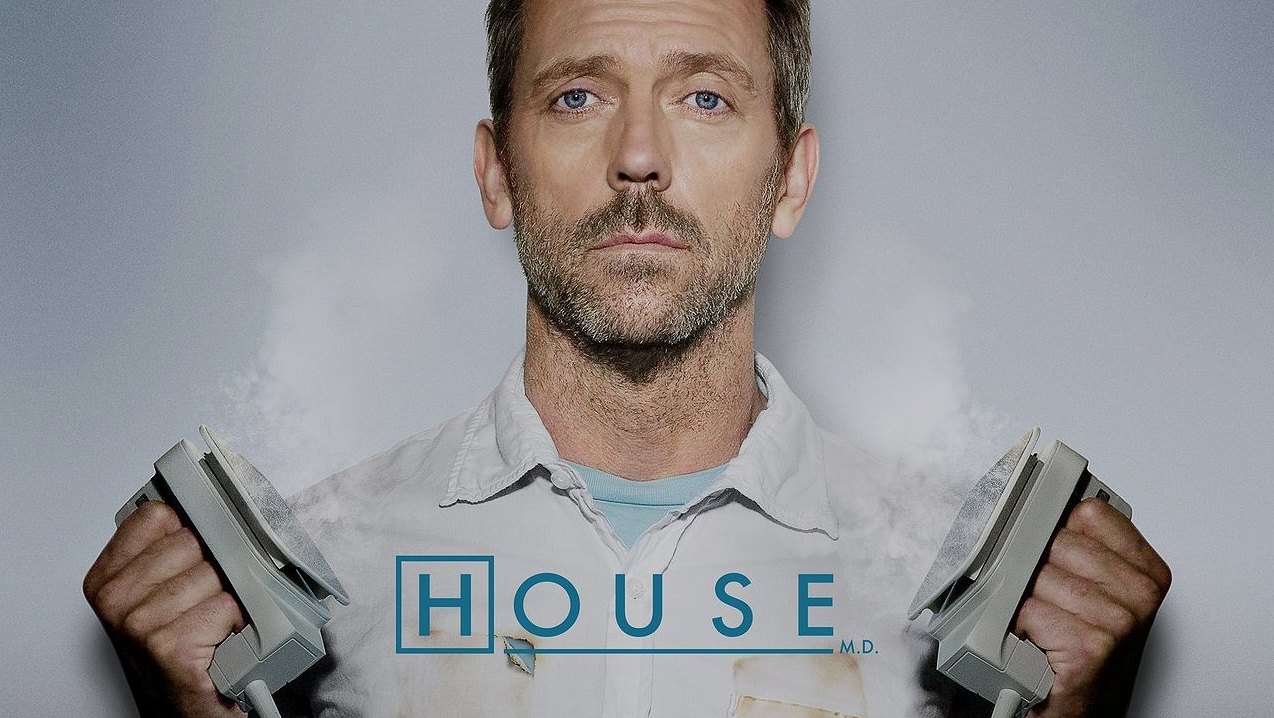
Screenshots



👍 Pros
- +Hugh Laurie's outstanding and memorable performance
- +Smart, complex, and layered writing
- +Perfect blend of medical puzzle-solving and life philosophy
👎 Cons
- −Some episodes feel repetitive in diagnostic patterns
- −Some supporting characters receive uneven development
Top Cast





FAQ
House M.D. has 8 seasons, totaling 176 episodes.
No, but it was partly inspired by the biographies of famous doctors like Dr. Thomas Bodan and Dr. William Osler.
The character House has a sarcastic and abrasive personality as a defining trait, but it stems from psychological trauma and physical pain, using words as a shield.